Organizing a great event is only half the work. The bigger challenge is getting the right people to discover it, engage with it, and ultimately book tickets. Whether you are planning a music concert, business conference, college event, workshop, comedy show, festival, or community gathering, effective promotion can make a major difference to attendance.
Today, event organizers have access to more digital channels than ever before. Social media, search engines, email marketing, online communities, paid advertising, and event listing platforms can all help increase visibility. However, using these channels effectively requires a clear strategy.
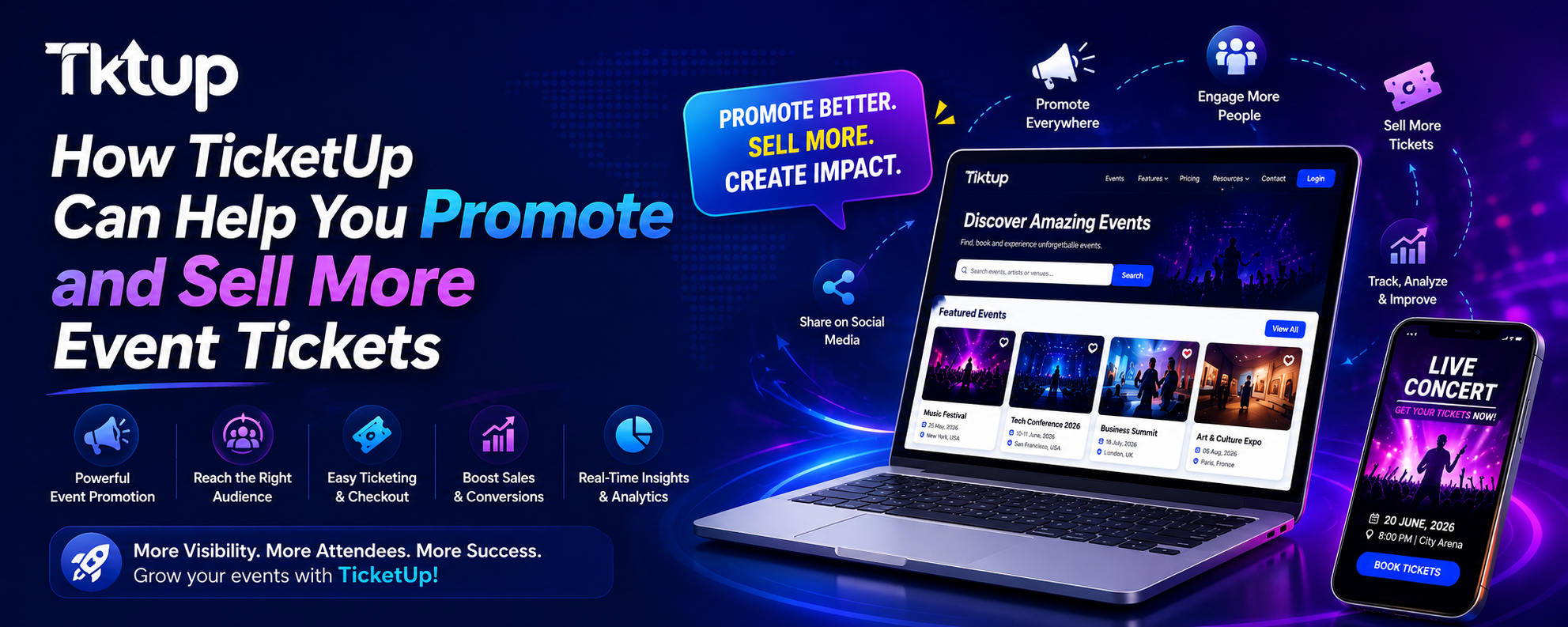
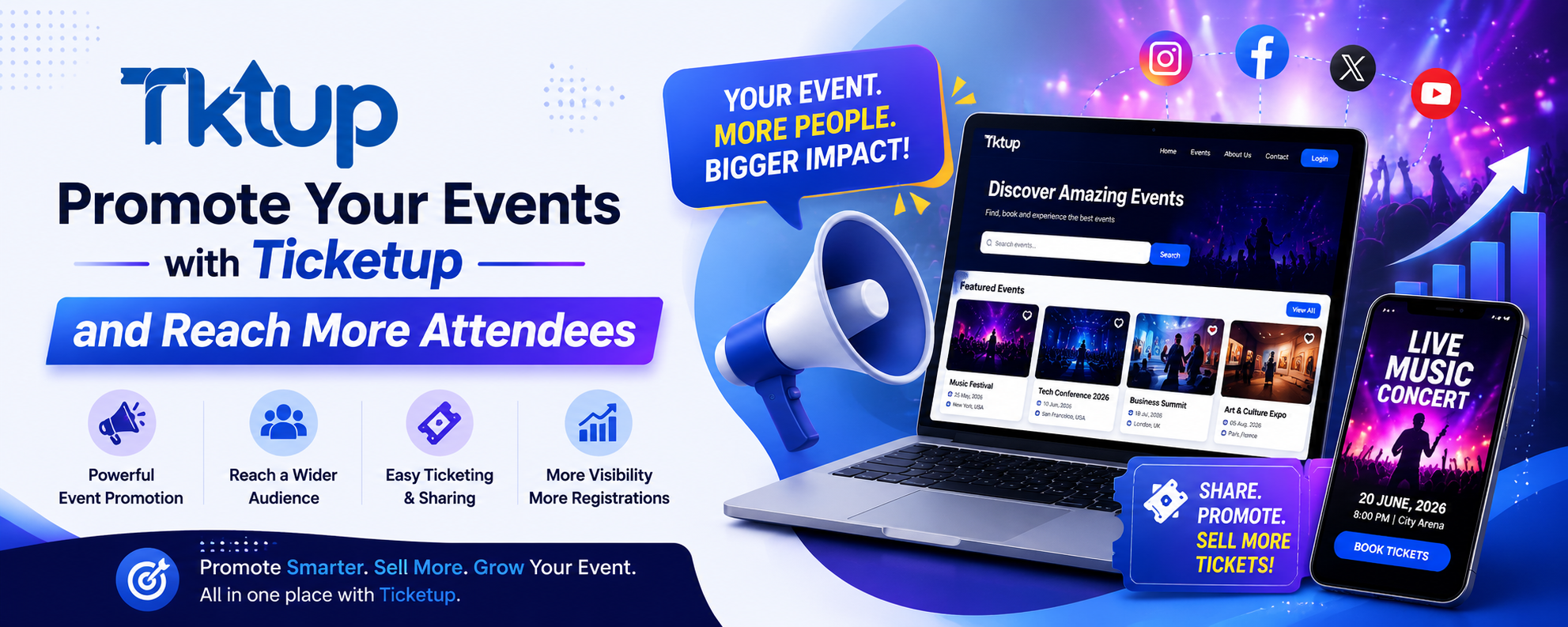
If you are looking for practical promote events ideas, Ticketup can help you bring your event promotion and ticketing activities together in one convenient platform.
Why Event Promotion Matters
Even the best event can struggle when potential attendees do not know about it. Event promotion helps create awareness, communicate your event's value, and encourage people to take action.
A strong promotion strategy can help you:
Increase event visibility
Reach new audiences
Generate interest before the event
Drive more ticket sales
Build an audience for future events
Create social media engagement
Make it easier for attendees to discover and book your event
Instead of relying on a single promotional channel, successful organizers usually combine multiple approaches to reach audiences at different stages of their decision-making journey.
1. Create an Attractive Event Listing
Your event listing is often the first place potential attendees learn more about your event. Make sure it communicates the essential information clearly.
Include:
Event name
Date and time
Venue or online event details
Event category
Compelling description
High-quality event images
Ticket information
Important terms and conditions
A clear booking call to action
With Ticketup, organizers can showcase their events online and make it easier for interested attendees to discover event information and access ticketing options.
A professional event page can also help establish credibility. When people have all the information they need in one place, they are more likely to move from interest to registration or ticket purchase.
2. Use Social Media to Build Event Awareness
Social media is one of the most effective channels for event promotion because it allows organizers to communicate directly with potential attendees.
Start promoting your event several weeks before the event date. Instead of posting the same promotional message repeatedly, create different types of content.
For example:
Event announcement posts
Speaker or performer introductions
Behind-the-scenes content
Short event teaser videos
Countdown posts
Previous event highlights
Attendee testimonials
Frequently asked questions
Early-bird ticket announcements
Instagram, Facebook, LinkedIn, YouTube, and other platforms can be selected depending on your audience.
For example, a business conference may perform well on LinkedIn, while a music or entertainment event may benefit heavily from Instagram and short-form video content.
3. Create Short Videos and Reels
Video content can make your event promotion more engaging. Instead of simply telling people about your event, show them what they can expect.
You can create:
15-second teaser:
Show the event name, date, venue, and a strong call to action.
30-second event preview:
Highlight speakers, performers, activities, or major attractions.
Behind-the-scenes video:
Give your audience a look at event preparation.
Previous-event recap:
Show memorable moments from earlier events.
Always include a clear next step, such as "Book Your Tickets," "Register Now," or "Discover the Event."
4. Take Advantage of Early-Bird Promotions
Creating urgency can encourage people to purchase tickets earlier.
An early-bird campaign can offer special pricing for attendees who book before a specific deadline. You can promote the offer through social media, email, event pages, and other digital channels.
For example:
Early Bird Tickets Available Now!
Book before the deadline and secure your place at the event.
The goal is not simply to offer a discount. It is to give potential attendees a reason to make their decision sooner.
Ticketup can be part of this process by providing a central place where audiences can discover your event and proceed toward ticket booking.
5. Encourage Attendees to Share Your Event
Your existing audience can become an important part of your promotion strategy.
Encourage attendees to share the event with friends, colleagues, and communities that may be interested.
You can create simple social media messages such as:
"Who are you bringing to the event?"
"Tag someone who shouldn't miss this!"
"Share this event with your friends."
You can also create shareable event graphics that include the event name, date, location, and booking information.
Word-of-mouth promotion can be especially valuable because people often trust recommendations from people they already know.
6. Partner with Influencers and Creators
Influencer marketing can help your event reach an audience that may not already know about you.
Look for creators whose audience matches your event rather than choosing someone based only on follower count.
For example:
A fitness event can collaborate with fitness creators.
A food festival can work with food bloggers.
A technology conference can partner with technology professionals.
A college event can collaborate with student creators.
A music event can work with local entertainment influencers.
Give partners clear information about your event and provide an easy way for their audience to find more details and book tickets.
7. Use Email Marketing
Email remains useful for event promotion, especially when you already have an audience.
Create different emails for different stages of the campaign.
Announcement Email
Introduce the event and explain why people should attend.
Reminder Email
Remind subscribers about the upcoming event and highlight important details.
Last-Chance Email
Create urgency when ticket availability or an early-bird deadline is approaching.
Event-Day Email
Send useful information such as venue details, timings, parking information, or access instructions.
A well-planned email sequence can keep your event in front of potential attendees without relying entirely on social media algorithms.
8. Make Your Event Easy to Discover
Event discovery is an important part of getting more attendees. People frequently search online for events based on location, category, date, or interest.
Your event content should clearly communicate these details.
For example, instead of using only a title such as:
Annual Business Meetup
consider providing additional context in your event description:
Annual Business Meetup 2026 – Networking & Entrepreneurship Event in Coimbatore
This gives potential attendees more information and can make the event easier to understand.
Using relevant keywords naturally throughout your event description can also support online discoverability.
9. Promote Your Event in Relevant Communities
Online communities can be valuable promotional channels when used appropriately.
Depending on your event, you may find relevant:
Facebook groups
LinkedIn communities
WhatsApp communities
Telegram groups
Local event communities
Industry forums
College communities
Professional networks
Avoid simply posting advertisements everywhere. Instead, understand the community rules and share genuinely useful information.
For example, if you are promoting a technology workshop, you can explain what attendees will learn, who should attend, and what they can expect.
10. Use Paid Advertising Strategically
Organic promotion is valuable, but paid advertising can help expand your reach.
Platforms such as Meta and Google allow event organizers to target audiences based on interests, demographics, locations, and online behavior.
A basic event advertising campaign can include:
Awareness: Introduce the event to relevant audiences.
Consideration: Show event benefits, speakers, performers, or activities.
Conversion: Encourage people to purchase tickets or register.
Retargeting can also be useful. Someone may see your event advertisement, visit the event page, and leave without booking. A follow-up campaign can remind them about the event.
11. Highlight What Makes Your Event Different
People need a reason to attend your event instead of choosing something else.
Your promotion should answer one important question:
"Why should I attend?"
Your answer could focus on:
Exclusive speakers
Live performances
Networking opportunities
Hands-on workshops
Special activities
Expert sessions
Entertainment
Limited seats
Unique experiences
Valuable learning opportunities
Do not simply list event features. Explain the value attendees will receive.
Instead of saying:
"Five expert speakers will attend."
You could say:
"Learn practical strategies directly from five industry experts and connect with professionals in your field."
12. Build a Countdown Campaign
A countdown can keep your event visible and create excitement.
For example:
30 Days to Go: Event announcement
21 Days to Go: Introduce speakers or performers
14 Days to Go: Share event highlights
7 Days to Go: Share attendee information
3 Days to Go: Final reminder
1 Day to Go: Tomorrow's the day!
Event Day: Welcome attendees
This approach gives you multiple opportunities to communicate with your audience without repeating exactly the same message.
13. Use Testimonials and Social Proof
People often feel more confident when they see positive experiences from previous attendees.
If you have organized events before, collect testimonials and reviews.
You can use them on:
Social media posts
Event pages
Promotional videos
Email campaigns
Advertising creatives
For example:
"The networking opportunities were excellent, and I met several professionals from my industry."
Real attendee experiences can help potential customers understand what your event is actually like.
14. Make Ticket Booking Simple
Promotion brings people to your event. A complicated booking process can stop them from completing the purchase.
Your ticketing experience should be simple, clear, and easy to navigate.
This is where an event ticketing platform such as Ticketup can become useful.
Instead of directing potential attendees through multiple disconnected steps, you can promote your event and provide a clear path toward ticket discovery and booking.
A smoother journey can help reduce confusion and make it easier for interested attendees to take action.
15. Promote Your Events with Ticketup
Ticketup is designed to help event organizers showcase and promote their events while making ticket discovery easier for audiences.
Whether you are organizing a small local event or a larger public gathering, having a dedicated event platform can simplify the process of getting your event in front of potential attendees.
You can use Ticketup as part of your broader promotional strategy by:
Listing your event
Sharing your event page
Promoting the event across social media
Directing audiences toward your ticketing experience
Building awareness before the event
Making event discovery more convenient
The key is to combine Ticketup with other promotional channels rather than depending on a single source of traffic.
16. Track Your Promotion Performance
Promotion should not stop once you publish your event.
Track which channels are generating the most interest and adjust your strategy accordingly.
Useful metrics can include:
Event page views
Social media engagement
Link clicks
Registrations
Ticket sales
Conversion rate
Email open rates
Advertising performance
Audience growth
For example, if Instagram generates significant traffic but very few ticket bookings, you may need to improve your event page or call to action.
If email produces strong conversions, consider investing more effort into your email audience.
Data can help you understand what works instead of relying entirely on assumptions.
A Simple Event Promotion Strategy
If you are unsure where to start, use this simple approach:
Step 1: Create your event listing on Ticketup.
Step 2: Prepare professional event graphics and short videos.
Step 3: Announce the event across relevant social media channels.
Step 4: Launch an early-bird promotion if appropriate.
Step 5: Encourage attendees and partners to share the event.
Step 6: Use email marketing to reach your existing audience.
Step 7: Run targeted paid advertising when additional reach is needed.
Step 8: Share countdown content as the event approaches.
Step 9: Send final reminders with important event information.
Step 10: Review your performance after the event and use the insights for your next campaign.
Final Thoughts
Successful event promotion is about more than simply announcing an event. It is about reaching the right audience, communicating your event's value, creating excitement, and making it easy for people to take action.
From social media campaigns and influencer partnerships to email marketing, paid advertising, community promotion, and event listings, there are many promote events ideas that organizers can use to increase visibility and attendance.
Ticketup can be an important part of this strategy by giving organizers a dedicated platform to showcase their events and helping audiences discover ticketing opportunities more conveniently.
If you are planning your next concert, conference, workshop, festival, meetup, or entertainment event, don't wait until the last minute to start promoting it.
Create your event, promote it across the right channels, reach more people, and make ticket booking easier with Ticketup.
Ready to Promote Your Next Event?
Give your event the visibility it deserves. Use Ticketup to showcase your event, connect with potential attendees, and turn your event promotion efforts into more opportunities for ticket sales.
Promote your event with Ticketup and start reaching more attendees today.
FAQ
1. What are the best ways to promote an event?
Some effective promote events ideas include social media marketing, email campaigns, influencer partnerships, paid advertising, event listings, early-bird offers, and attendee referrals.
2. How can Ticketup help promote my event?
Ticketup allows organizers to showcase their events online, share event information with potential attendees, and provide a convenient way for audiences to discover and book tickets.
3. Can I promote different types of events on Ticketup?
Yes. Ticketup can be used to promote various types of events, including concerts, conferences, workshops, festivals, entertainment shows, meetups, and community events.
4. How early should I start promoting my event?
Ideally, start promoting your event several weeks before the event date. Larger events may benefit from starting campaigns one to several months in advance.
5. How can social media help increase event attendance?
Social media helps you reach relevant audiences through posts, videos, reels, stories, countdowns, and paid campaigns. Encourage followers to share your event to increase organic reach.
6. What content should I post to promote an event?
You can share event announcements, speaker or performer introductions, behind-the-scenes videos, testimonials, event highlights, countdown posts, FAQs, and ticket availability updates.
7. How can I get more people to discover my event?
List your event on platforms such as Ticketup, optimize your event information, use relevant keywords, promote through social media and communities, and consider targeted advertising.
8. Can I use paid advertising to promote my Ticketup event?
Yes. You can use platforms such as Meta and Google Ads to reach audiences based on location, interests, demographics, and other targeting options, then direct interested users to your event listing.