Event planning has changed significantly in recent years. From corporate conferences and workshops to concerts, exhibitions, networking events, and community gatherings, organizers now need more than spreadsheets, phone calls, and manual registration processes to manage successful events.
In 2026, event management software has become an essential technology for simplifying event planning, improving attendee experiences, automating repetitive tasks, and increasing event revenue. The right platform can bring registrations, ticketing, payments, communication, attendee management, analytics, and marketing together in one place.
One of the biggest priorities for organizers is making registration simple and accessible. Offering free event registration can help organizers attract more participants, especially for community events, webinars, networking sessions, workshops, and promotional events.
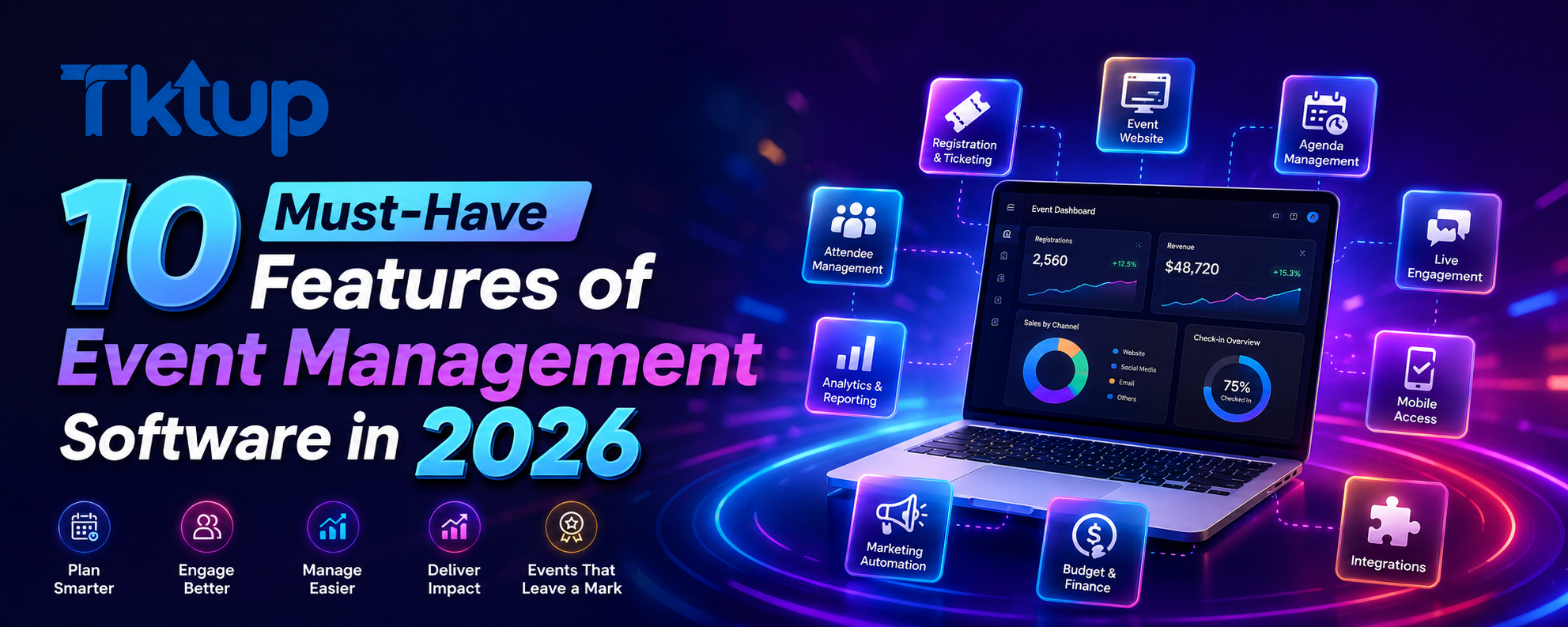
If you're planning to invest in event management technology, here are the 10 must-have features of event management software in 2026.
1. Online Event Registration
A smooth registration process is one of the most important features of modern event management software. Attendees should be able to discover an event, view the details, and register from their smartphones or computers without unnecessary steps.
Modern platforms should provide customizable registration forms that allow organizers to collect relevant attendee information such as:
Name and contact details
Company or organization
Event preferences
Dietary requirements
Session preferences
Special requests
Additional custom fields
The registration process should also work seamlessly across desktop, tablet, and mobile devices.
For free events, free event registration can remove barriers for attendees and make it easier for organizers to increase participation. A simple registration experience can also reduce incomplete registrations and improve the overall attendee journey.
2. Online Ticketing and Multiple Ticket Types
Events often have different types of attendees. For example, an organizer may offer early-bird tickets, VIP tickets, standard tickets, student tickets, group tickets, or complimentary passes.
Event management software should allow organizers to create and manage multiple ticket categories from a single dashboard.
Useful ticketing capabilities include:
Multiple ticket types
Early-bird pricing
Discount codes
Group ticketing
Limited ticket quantities
Complimentary tickets
Ticket availability controls
Automated ticket confirmation
Organizers can use different pricing strategies depending on their audience and event objectives.
For example, an event can provide free registration for general attendees while offering paid VIP or premium access. This creates flexibility while helping organizers reach a wider audience.
3. Secure Online Payment Integration
For paid events, secure payment processing is essential. Attendees expect convenient payment options, while organizers need reliable transaction tracking.
Event management software should integrate with popular payment gateways and support different payment methods.
A strong payment system should provide:
Secure transactions
Multiple payment methods
Automated payment confirmation
Refund management
Transaction records
Payment status tracking
Digital invoices or receipts
Security is particularly important because event platforms may process large amounts of customer and payment information.
A reliable system should follow appropriate security practices and use trusted payment infrastructure to protect sensitive information.
4. Event Website and Landing Page Builder
An event needs an online presence where potential attendees can find important information before registering.
Instead of creating a separate website for every event, modern event management platforms can provide customizable event pages or landing pages.
An event page can include:
Event title
Date and time
Venue or online meeting details
Event description
Speakers
Agenda
Ticket information
FAQs
Registration button
Contact information
A mobile-friendly design is especially important because many users discover and register for events through smartphones.
Organizers should also be able to customize branding elements such as logos, images, colors, banners, and event descriptions.
5. Automated Email and Notification System
Communication is one of the biggest challenges in event management. Organizers need to send confirmations, reminders, schedule updates, announcements, and follow-up messages to attendees.
Event management software can automate these communications.
For example, when someone registers for an event, the platform can automatically send a confirmation email. Before the event, automated reminders can be sent to reduce no-shows.
Common automated communications include:
Registration confirmation
Payment confirmation
Ticket delivery
Event reminders
Schedule updates
Venue information
Speaker announcements
Post-event thank-you emails
Feedback requests
Automation saves organizers valuable time and ensures that attendees receive important information at the right stage of the event journey.
6. Attendee Management and Check-In
Managing attendees doesn't end after registration. On the event day, organizers need to know who has registered, who has arrived, and who still needs to check in.
Modern event management software should include attendee management and digital check-in capabilities.
Features may include:
Digital attendee lists
QR code tickets
QR code scanning
Mobile check-in
Badge printing
Attendance tracking
Check-in reports
QR-based check-in can significantly reduce queues at the venue. Instead of manually searching for attendee names, staff can scan a digital ticket and verify registration within seconds.
This improves the attendee experience while giving organizers real-time visibility into event attendance.
7. Event Marketing and Promotion Tools
Creating an event is only half the job. Organizers also need to attract the right audience.
Event management software should provide tools that support event promotion and marketing.
Useful marketing features include:
Social media sharing
Promotional links
Discount codes
Referral campaigns
Email marketing
Event landing pages
Campaign tracking
Registration conversion analytics
Social media integration can make it easier for attendees and organizers to share event information across platforms.
For example, an organizer hosting a business networking event can create a registration page and share it through LinkedIn, Instagram, Facebook, WhatsApp, and other marketing channels.
Combining marketing and registration within the same platform can make it easier to measure which promotional channels generate registrations.
8. Real-Time Analytics and Reporting
Data has become an important part of event planning. Organizers need to understand how many people registered, which tickets are selling, where attendees are coming from, and how successful promotional campaigns are.
Event management software should provide a centralized analytics dashboard.
Important metrics can include:
Total registrations
Ticket sales
Revenue
Registration conversion rate
Attendance rate
Cancellation rate
Ticket category performance
Marketing campaign performance
Check-in numbers
Real-time reporting allows organizers to make faster decisions.
For example, if early-bird tickets are selling faster than expected, organizers may decide to increase ticket availability or introduce another pricing tier. If registrations are slow, they can adjust their marketing strategy before the event date.
9. AI-Powered Automation and Personalization
Artificial intelligence is becoming one of the most significant trends in event technology in 2026.
AI-powered event management software can help automate tasks and personalize attendee experiences.
Potential AI applications include:
Personalized event recommendations
Automated attendee communication
AI-generated event descriptions
Smart audience segmentation
Chatbots for attendee questions
Automated content suggestions
Predictive attendance insights
Personalized session recommendations
For example, an AI system could analyze an attendee's selected interests and recommend relevant sessions, speakers, or networking opportunities.
AI can also help organizers reduce repetitive administrative work, allowing them to focus more on event strategy and attendee engagement.
However, AI should complement human event teams rather than completely replace them. Successful events still depend on creativity, communication, relationship building, and thoughtful planning.
10. Integration and Scalability
The final must-have feature is integration. Event organizers often use several different tools for marketing, communication, payments, CRM, analytics, and online events.
An event management platform should be capable of integrating with other business systems where required.
Useful integrations can include:
Payment gateways
CRM platforms
Email marketing tools
Social media platforms
Accounting software
Calendar applications
Video conferencing platforms
Analytics tools
Scalability is equally important. A platform that works for a small workshop should ideally be capable of supporting larger conferences, exhibitions, festivals, and corporate events as the business grows.
Why Free Event Registration Matters in 2026
Not every event needs to charge an entrance fee. Free events can be valuable for businesses, educational institutions, communities, startups, professional groups, and organizations looking to build awareness.
Offering free event registration can make it easier for potential attendees to participate without worrying about ticket costs.
Free registration can be particularly useful for:
Webinars
Networking events
Product launches
Community events
Workshops
Educational sessions
Business meetups
Promotional events
However, free registration doesn't mean organizers should sacrifice professionalism. Attendees should still receive confirmation emails, digital tickets or registration details, event reminders, and a smooth check-in experience.
Platforms such as Ticketup can help organizers simplify event listing and registration while providing a convenient way for attendees to discover and register for events.
How to Choose the Right Event Management Software
With many event technology platforms available, choosing the right solution requires careful consideration.
Before selecting a platform, ask:
Does it support my event type?
Make sure the platform can handle your specific requirements, whether you're organizing conferences, workshops, concerts, exhibitions, or community events.
Is registration easy for attendees?
A complicated registration process can result in abandoned registrations.
Does it support free and paid events?
Having both options gives organizers greater flexibility.
Does it provide useful analytics?
Good reporting helps organizers understand event performance.
Is it mobile-friendly?
Both organizers and attendees increasingly rely on mobile devices.
Can it scale with my events?
Your platform should be capable of supporting increasing attendees and more complex events.
Does it provide reliable support and security?
Technical issues can directly affect the attendee experience, so reliability and data protection matter.
The Future of Event Management Software
Event management is moving toward greater automation, personalization, and data-driven decision-making. AI, mobile technology, digital ticketing, automated communication, and real-time analytics are making it easier for organizers to manage the complete event lifecycle.
The most successful event platforms will not simply focus on ticket sales. They will provide an end-to-end ecosystem covering event discovery, registration, ticketing, marketing, attendee engagement, check-in, analytics, and post-event communication.
For organizers, the goal is simple: reduce administrative work while creating a better experience for attendees.
Conclusion
The right event management software can transform how events are planned, promoted, and delivered. From online event registration and free event registration to AI-powered personalization, secure payments, digital check-in, marketing automation, and real-time analytics, these features can help organizers manage events more efficiently.
In 2026, choosing an event platform is no longer just about selling tickets. It's about creating a complete digital experience for both organizers and attendees.
Whether you're organizing a small workshop, a professional conference, a networking event, or a large-scale public event, investing in the right technology can help you simplify operations, increase registrations, and deliver a more engaging event experience.
FAQ
1. What is event management software?
Event management software is a digital platform that helps organizers manage event registration, ticketing, payments, attendee information, marketing, check-ins, communication, and analytics from one place.
2. What are the must-have features of event management software in 2026?
Key features include online registration, ticket management, secure payments, event website creation, automated notifications, attendee management, event marketing, analytics, AI-powered automation, and third-party integrations.
3. What is free event registration?
Free event registration allows attendees to register for an event without paying a registration or ticket fee. It is useful for webinars, workshops, networking events, community programs, and promotional events.
4. Can event management software handle both free and paid events?
Yes. Modern event management platforms can support free events as well as paid events with multiple ticket types, pricing tiers, discount codes, and online payment options.
5. How does event management software improve attendee experience?
It simplifies registration, provides instant confirmations, enables digital tickets and QR check-in, sends event reminders, and gives attendees easy access to event information.
6. Can I manage event registrations online?
Yes. Event management software allows organizers to create online registration forms, collect attendee details, track registrations, and manage attendee information through a centralized dashboard.
7. How does AI help event management in 2026?
AI can assist with attendee recommendations, personalized communication, audience segmentation, event content creation, chatbots, and data-driven insights.
8. Is QR code check-in available in event management software?
Many modern platforms support QR-based digital tickets and check-in, allowing organizers to verify attendees quickly and reduce queues at the venue.